
Customer Loyalty in the Age of Economic Pressure: How to Engage Value-Seeking Customers
Why Customer Loyalty Is Being Redefined
Customer loyalty is undergoing a structural transformation.
Across industries such as hospitality, tourism, retail, and experience-driven sectors, brands are facing a new reality: customer behavior is shifting under economic pressure.
Customers are not necessarily less loyal, but they have become significantly more selective about where they perceive value.
This is not a temporary reaction to inflation. It reflects a deeper change in how customers evaluate brands, make decisions, and engage over time.

Economic Pressure is forcing brands to continuously justify the value they deliver
·
Economic Pressure is forcing brands to continuously justify the value they deliver ·
What Is Economic Pressure and How It Impacts Customer Behavior
Economic pressure refers to the combination of financial constraints and perceived uncertainty that forces customers to make more deliberate, value-driven decisions.
In today’s context, this includes:
inflation reshaping spending priorities
increased scrutiny on discretionary spending
more intentional purchasing decisions
higher expectations toward brands
lower tolerance for irrelevant experiences
According to Deloitte research, around 4 in 10 consumers are now exhibiting cost-conscious or deal-driven behaviors, including high-income segments.
The Rise of Value-Seeking Customers

This shift has led to the emergence of a new dominant profile: the value-seeking customer
These customers are not simply looking for lower prices. They are actively evaluating whether each interaction delivers meaningful value. They:
compare more
switch more easily
expect more relevance
and reassess value continuously
“Customer loyalty is no longer driven by habit, it is driven by perceived value in every interaction.”
What this context ultimately demands is not a tactical adjustment, but a shift in mindset. Brands can no longer assume loyalty as a byproduct of past interactions or competitive pricing. In a value-seeking environment, loyalty must be continuously re-earned through every brand touchpoint.
This requires moving away from thinking in terms of brand and campaigns, and toward designing systems that consistently deliver relevance, clarity, and meaningful value, while enriching data sovereignty, control and brand purpose.
The question is no longer “How do we attract customers?” but “How do we continuously justify why they should stay?”
In this new reality, successful brands are those that:
treat every interaction as a moment of value creation
understand that value is perceived, contextual, and constantly evolving
design experiences that reduce effort while increasing meaning
and build mechanisms to adapt in real time to changing customer expectations
Under economic pressure, customers do not lower their standards. They raise them.
What “Value” Means in Modern Customer Loyalty Strategy
Value is no longer what brands offer. It is what customers experience and recognize as useful over time. To understand modern loyalty, it is essential to define value: Value can be defined as:
The perceived balance between what a customer gives and what they receive, shaped by context, emotion, and expectations.
This perception operates across three dimensions:

Psychological Value: Value must feel meaningful in the moment.
emotional reward
recognition
identity alignment
sense of progress
Economic Value: Value must be efficient and justifiable over time.
cost versus utility
time investment
effort and cognitive load
Marketing Value: Customers expect relevance, personalization, and continuity.
relevance
personalization
experience quality
convenience
Why Competing on Price Alone Weakens Customer Loyalty

In response to economic pressure, many brands default to price competition.
However, this approach creates long-term risks.
According to Deloitte research, up to 40% of perceived value is driven by factors beyond price, including experience, service, and convenience.
At the same time, research from McKinsey & Company and Forrester shows that price-driven strategies:
erode margins
reduce differentiation
and weaken customer loyalty
Price can attract customers, but it rarely builds lasting relationships. Because when value is reduced to price, the relationship between brand and customer becomes purely transactional and easy to lose.
Why Customer Loyalty Becomes Critical Under Economic Pressure
Economic pressure does not eliminate loyalty, it transforms it. Customers no longer remain loyal by default. They stay loyal when value is continuously demonstrated.
This means brands must move from:
transactional thinking → to continuous value delivery
Loyalty becomes essential because it allows brands to:
extend value beyond the purchase
maintain relevance across the journey
reward meaningful interactions
and justify engagement over time
“Loyalty programs have moved from a “nice-to-have” to a strategic lever that drives continual business over time. Most consumers (72%) say loyalty programs make them more likely to spend with their preferred brand, while over half (56%) increase their spending because of the program.Perceived value also increases, with 80% of consumers noting they get more from the brand because of the loyalty program.”
The Challenge: Why Traditional Loyalty Programs Fail to Engage Customers
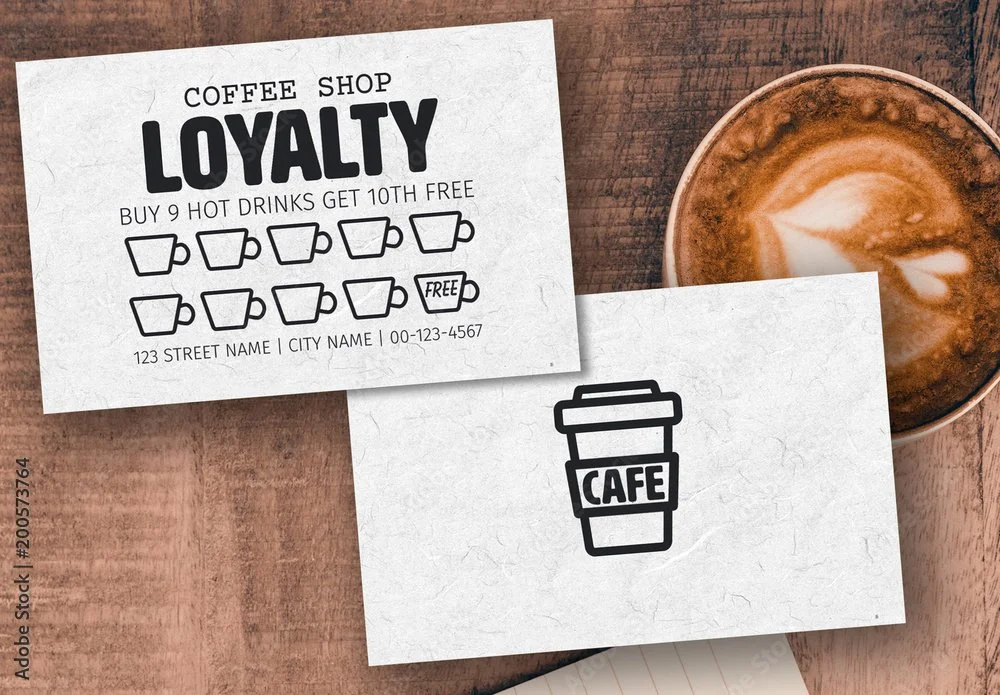
Most traditional loyalty programs struggle because they are not designed for today’s customer behavior. They are still built on models that were designed for a completely different market context.
They are typically:
closed systems with limited interoperability
static structures with predefined rules
generic in rewards and personalization
focused on transactions instead of engagement
As a result, they:
fail to adapt to context
do not reflect individual preferences
cannot connect experiences across channels
and provide limited insight into customer behavior
Traditional loyalty programs do not fail because loyalty is irrelevant, they fail because they are not aligned with how value is created today.
Building Next-Generation Loyalty Programs for Value-Seeking Customers
According to Deloitte research “Reshaping loyalty programs in an era of value seeking” , modern loyalty programs must evolve to deliver value that is:
immediate
relevant
and seamlessly integrated into the customer journey
They talk about tree core principles define next-generation loyalty systems:
1. Effortless and Frictionless Customer Experience
Customers expect loyalty programs to work automatically.
The more seamless the experience, the higher the engagement.
2. Personalized Loyalty Programs with Contextual Relevance
Generic rewards no longer work.
Modern loyalty systems must adapt to behavior, preferences, and context.
3. Omnichannel Loyalty and Real-Time Engagement
Customers move across multiple touchpoints.
Loyalty programs must connect digital and physical interactions in real time.
“When loyalty programs make it easy to redeem rewards, are personalized in meaningful ways, and are supported by intuitive digital features, they drive stronger perceptions of value and measurable behavior change that price cuts alone cannot achieve.”
Because value is no longer created in isolated moments, it is built continuously across the journey. Read more about how to design customer journeys in our blog How to Design Behavior That Drives Measurable Impact in Tourism and Experience Industry
What Customers Expect from Digital Loyalty Programs Today
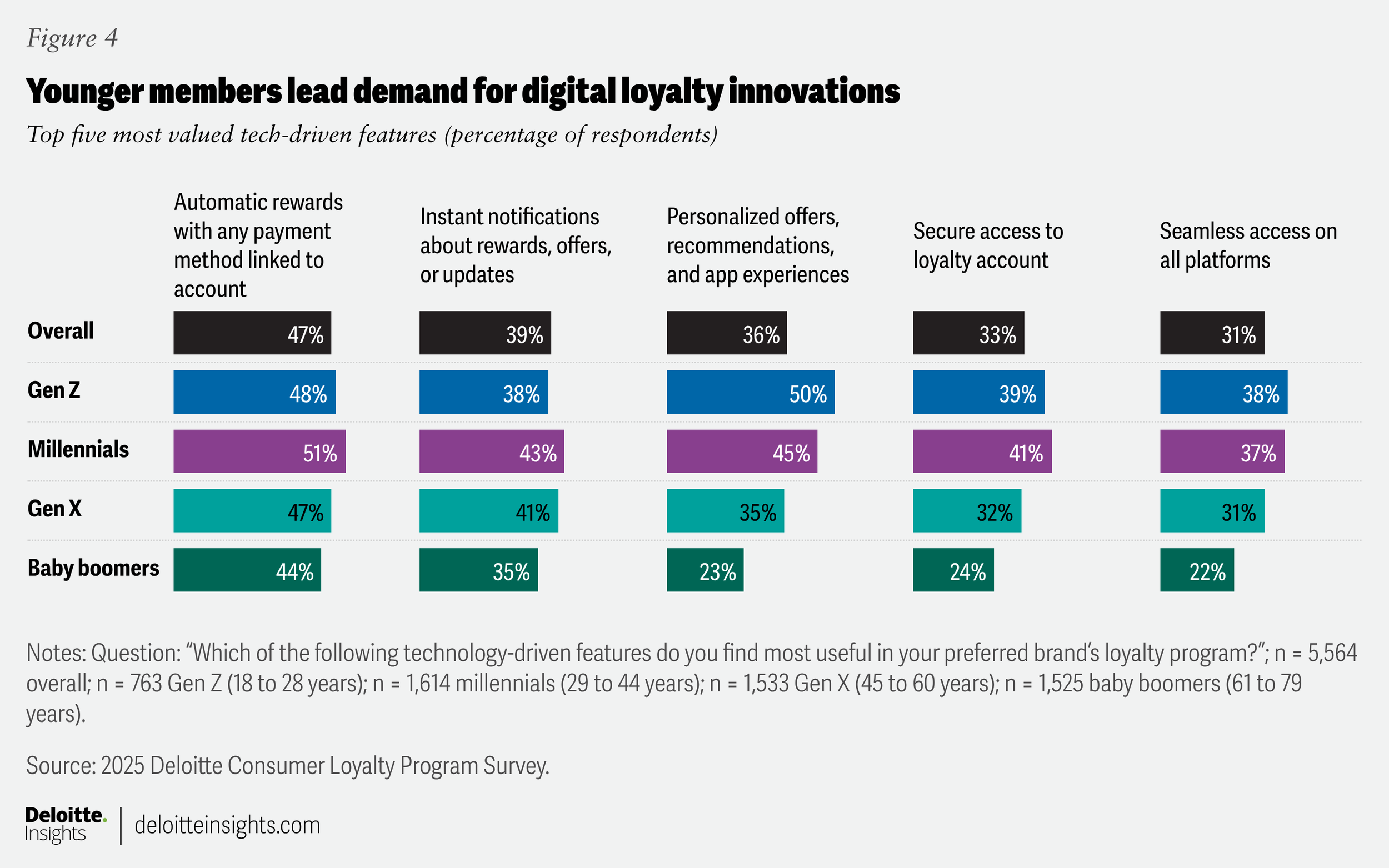
Deloitte data confirms this shift.
Customers increasingly value:
automatic rewards linked to payments
real-time notifications and feedback
personalized offers and experiences
secure and trusted access
seamless interaction across platforms
Younger generations, especially Gen Z and Millennials, lead this trend, placing the highest importance on personalization and digital integration.
Value Is Demonstrated Through Customer Behavior
Today, value is not defined by what brands communicate, but by how customers respond.
Customer behavior reveals perceived value through:
repeat engagement
participation
interaction frequency
and consistency over time
This requires brands to move beyond measuring transactions and start understanding engagement as a dynamic process.
The Role of New Era Loyalty Systems in Measuring Customer Engagement
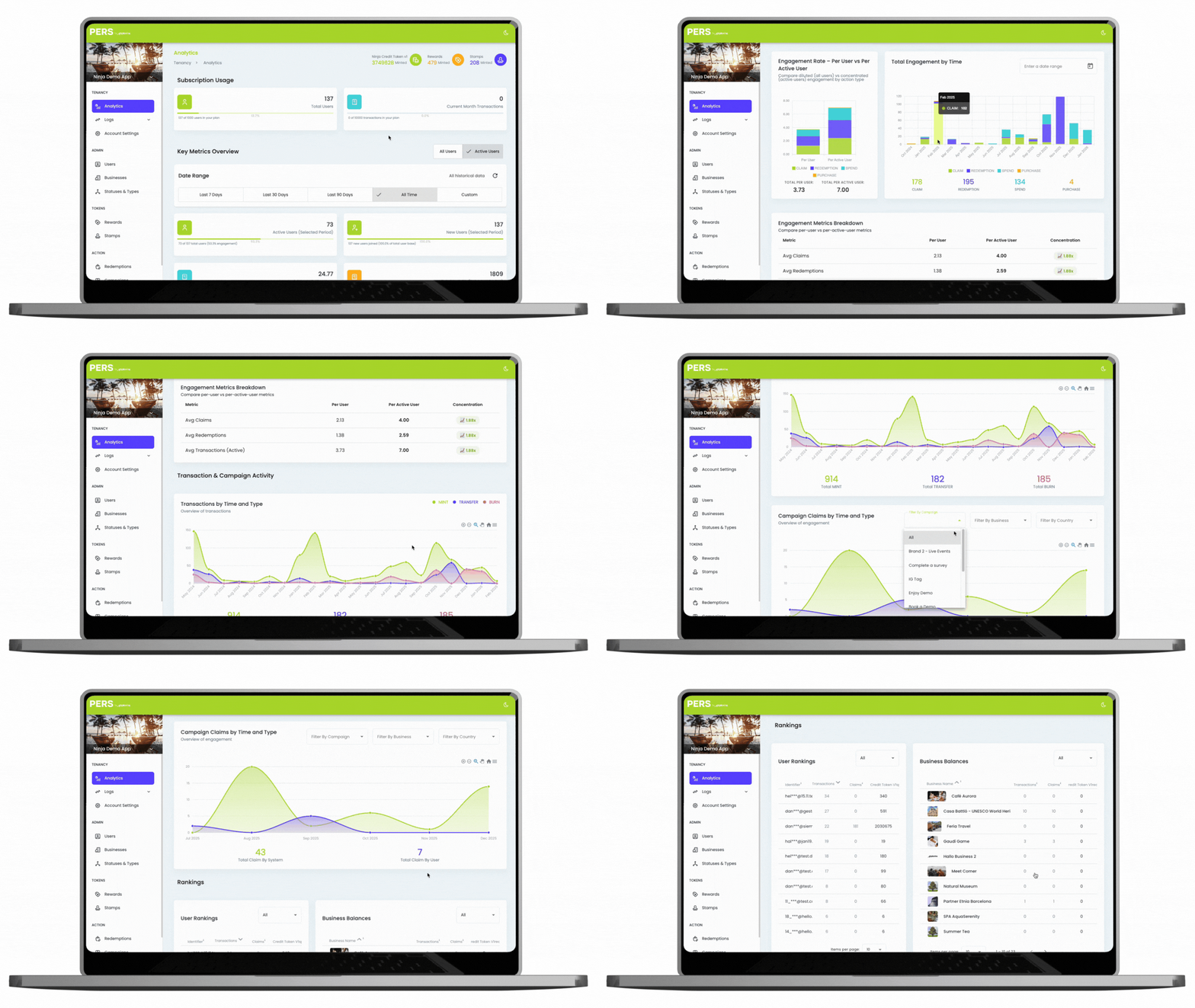
In this context, loyalty systems become essential, not simply as retention tools, but as mechanisms to understand and shape customer behavior.
Modern loyalty systems allow organizations to move beyond transactional visibility and gain a deeper understanding of how customers actually interact with their brand, and offer a long-term value.
They enable brands to:
observe behavior across multiple touchpoints
identify which actions generate real value
understand patterns of engagement over time
and connect these behaviors to measurable business outcomes
This shift transforms loyalty from a marketing function into a strategic capability.
Why Loyalty Infrastructure Is the Future of Customer Engagement

Loyalty is no longer a campaign, it is an infrastructure. An infrastructure that allows brands to:
connect interactions across channels
deliver continuous value
adapt to customer behavior and hyper personalization (hello AI)
and operate at scale
This is where platforms like PERS by eXplorins, play a critical role.
How PERS Enables Scalable, Behavior-Based Loyalty Systems
PERS is designed as a loyalty and engagement infrastructure that enables brands to move from static programs to dynamic systems.
It allows organizations to:
connect digital and physical touchpoints
transform actions into measurable engagement data
reward behavior in real time
and build logic aligned with their business objectives
Scalable Loyalty Programs for Growth and Adaptability

One of the key advantages of PERS is scalability. Unlike traditional systems, PERS enables brands to:
design flexible reward logic
adapt to different use cases and industries
expand across ecosystems and partners
connect endless platforms and touchpoints
and scale without rebuilding infrastructure
This allows loyalty strategies to evolve alongside business growth.
From Customer Value to Measurable Business Impact
When value is translated into behavior, organizations can:
measure real engagement instead of only sales
identify high-value actions
optimize customer journeys
connect behavior to revenue and retention
and increase ROI on engagement strategies
Watch full Webinar Loyalty in the Age of Economic Pressure | How Brands Win When Customers Become "Value-Seekers"
Conclusion: Customer Loyalty in a Value-Driven Economy
In the age of economic pressure, customer loyalty is no longer defined by points or discounts. It is defined by:
relevance
consistency
personalization
and measurable engagement
The brands that succeed will not be those that compete on price, but those that build systems capable of continuously delivering and validating value.
Book a demo to explore PERS
Contact us here
Watch all webinars in our YouTube Channel
Join our newsletterand be the first to know about product updates and industry insights
Want to integrate? Check API documentation here
Book a demo *
Book a demo *
-
Customer loyalty today is no longer based on habit or repeated purchases alone. In an environment shaped by economic pressure, customers evaluate value continuously and make more deliberate decisions. Loyalty is now driven by how consistently a brand delivers relevant, meaningful, and efficient experiences over time. This means loyalty must be actively earned in every interaction, not assumed from past behavior.
-
Traditional loyalty programs often rely on static point systems, generic rewards, and transaction-based logic. These models struggle in today’s context because they do not adapt to customer behavior, lack personalization, and fail to connect experiences across channels. As customer expectations evolve, loyalty systems must move from rigid structures to dynamic, behavior-based models that reflect real engagement.
-
Value-seeking customers expect loyalty programs to provide immediate, relevant, and personalized benefits. They prioritize seamless experiences, automatic rewards, and offers that reflect their behavior and preferences. Rather than focusing only on discounts, they look for programs that deliver ongoing value across the entire customer journey, both online and offline.
-
Behavior-based rewards increase engagement by recognizing and reinforcing meaningful customer actions beyond purchases. These actions can include participation, interaction, exploration, or community involvement. By rewarding behavior instead of only transactions, brands create stronger emotional connections, encourage repeat engagement, and gain deeper insights into what drives customer value.
-
A modern loyalty infrastructure is a system that connects customer interactions across touchpoints, enables real-time engagement, and allows brands to measure and respond to behavior dynamically. Unlike traditional programs, it is scalable, flexible, and designed to adapt to changing customer expectations. This type of infrastructure enables organizations to continuously deliver value, optimize engagement strategies, and build long-term customer relationships.
-
AI enables loyalty programs to move beyond static rewards and deliver value that adapts in real time to each customer. By analyzing data from user behavior, interactions, and contextual signals across the experience, AI can dynamically generate personalized rewards, tokens, or stamps that reflect what is most relevant for each individual.
This means that instead of offering the same incentives to all users, loyalty systems can respond to:
how customers engage
what they value
and how their behavior evolves over time
In advanced infrastructures like PERS, this capability allows brands to create dynamic, AI-powered tokens and rewards that are continuously adjusted based on real-time data from the customer journey. The result is a more relevant, engaging, and efficient loyalty experience, where value is not predefined, but generated in context.
